
Travel guide
Calais
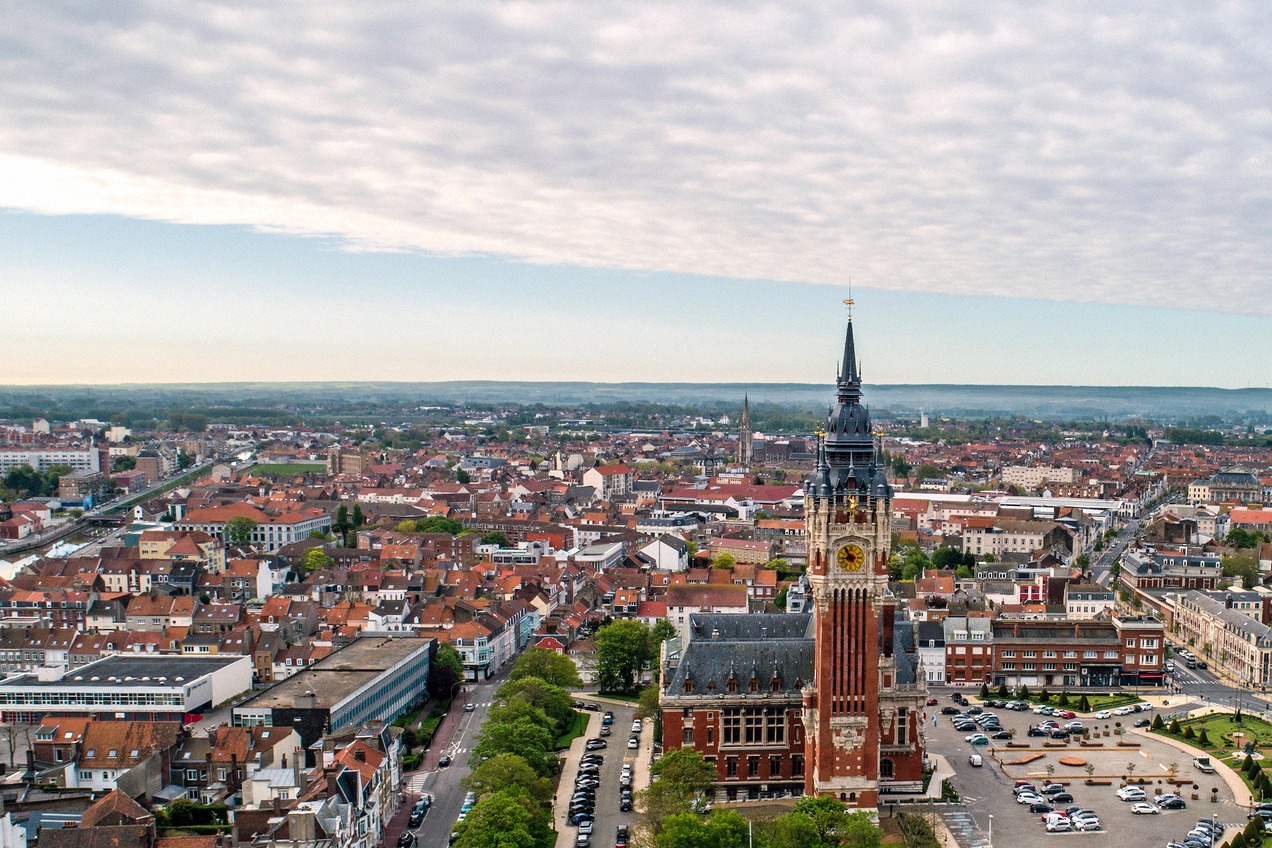
Calais is a port town in the Hauts-de-France region, about 30 km across the water from Dover. It was English from 1347 to 1558, and Rodin's Burghers in front of the town hall recall the six citizens of the 1347 siege. The town hall belfry is a UNESCO World Heritage Site, and in 2026 the beach of Calais was voted the favourite of the French.
What brings you to Calais?
Town and history
Beach and Opal Coast
Shopping
Crossing to England
From the Burghers to Cap Blanc-Nez
Calais on the map
Your stay
A day in Calais
The town hall was built between 1911 and 1923, after an 1885 decree had allowed Calais and Saint-Pierre to merge. Its 75 m belfry largely survived the Second World War, when 73% of the town was destroyed. A guided tour takes 30 minutes and climbs to a walkway 55 m up, by 175 steps or by lift. In front of it stand Rodin's Burghers of Calais. The group recalls the six citizens who offered themselves to the English in 1347, and this is the first of twelve original casts.
On Quai du Commerce, the Cité de la Dentelle occupies a former lace factory. Except on Tuesdays and Saturdays, the Leavers looms are demonstrated several times a day, and the first tulle workshops in Calais were set up by English lacemakers from 1816. In Calais-Nord stand the 13th-century watchtower on Place d'Armes and the church of Notre-Dame, and the Musée des Beaux-Arts, where entry is free, is five minutes' walk from Calais-Ville station. All of them are described under things to do.
Two days: the beach and the Opal Coast
From the town centre, a walkway leads past the harbour and Fort Risban to the beach. The seafront promenade was redesigned in 2021, and in clear weather you can see the English cliffs. Louis Blériot took off from Blériot-Plage, then called Les Baraques, on 25 July 1909 and landed near Dover. On the seafront, the dragon built by La Machine carries passengers on its back at up to 4 km/h.
On the Opal Coast, Cap Blanc-Nez rises to 134 m, and together with Cap Gris-Nez it forms the Grand Site des Deux Caps. By car, Gravelines is 20 minutes away, Boulogne-sur-Mer 40 minutes and Dunkirk about 45 minutes, and the options are collected under day trips.
A stop before or after the crossing
The ferries to Dover leave from the ferry terminal and are covered on the ferries page. The LeShuttle terminal is in Coquelles, and Eurotunnel LeShuttle explains how check-in works.
The Cité Europe mall stands next to the tunnel terminal, and shopping also covers the town's wine merchants and markets. Without a car, trains from Paris and Lille reach Calais, and getting there explains the routes by rail, road and bus. Hotels are listed under where to stay, campsites and motorhome areas under camping. The welsh, cheddar melted with beer on bread, and other local dishes are under food and drink.