
Day trips from Calais
Boulogne-sur-Mer, Nausicaá, Dunkirk, Saint-Omer and Montreuil-sur-Mer
Gravelines, behind its star-shaped ramparts by Vauban, is 20 minutes from Calais by car. Boulogne-sur-Mer, with its medieval walls, its fishing port and the Nausicaá sea centre, is 40 minutes away, and Dunkirk about 45 minutes. Le Touquet-Paris-Plage and Berck are an hour and a half away by the coast road.
On this page
Boulogne-sur-Mer
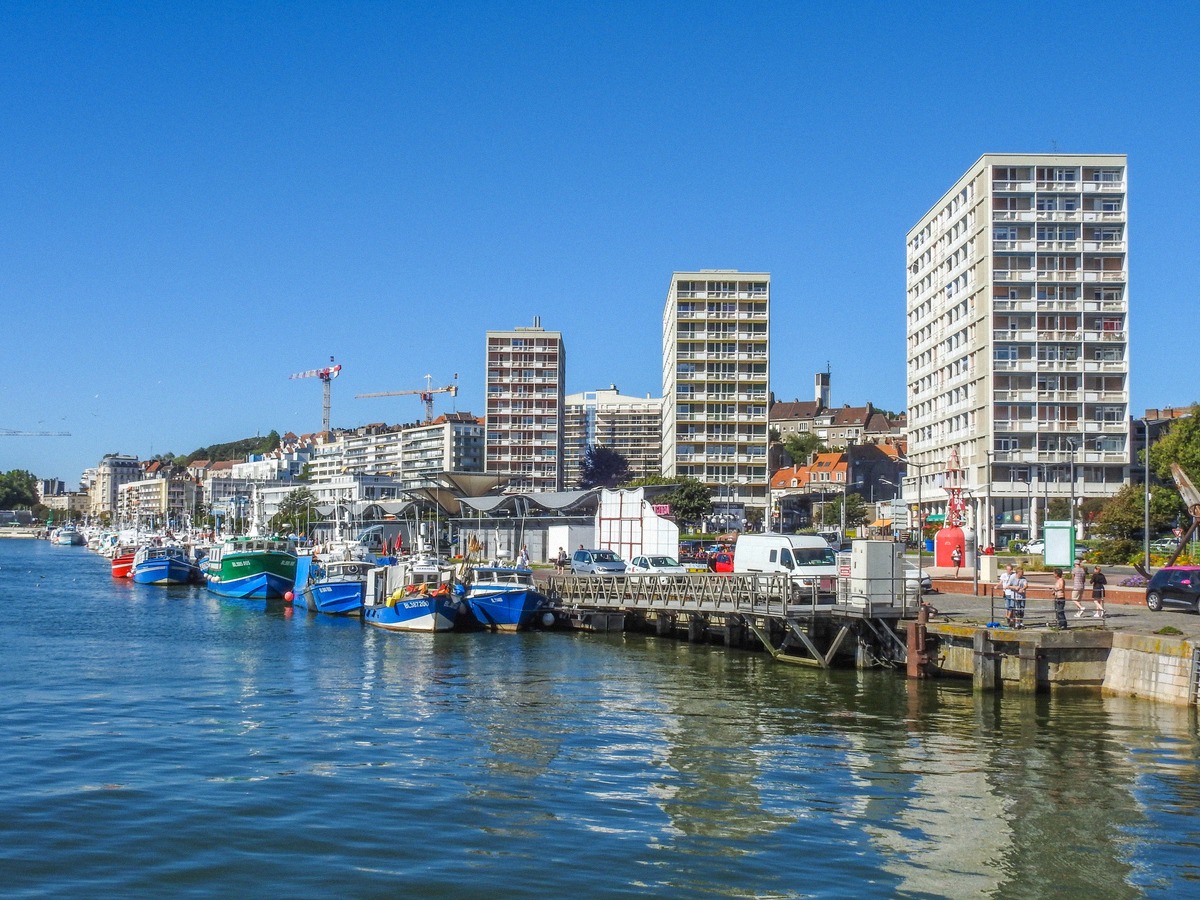
Boulogne-sur-Mer is 40 minutes from Calais by car. It is France's leading fishing port, where more than 30,000 tonnes of fish are landed each year, and in November the town holds its herring festival. The old town grew up as a fortified town in the 13th century and has kept its medieval ramparts.
- Belfry: a former keep from the 12th century that became a belfry in the 13th; it is 37 m high, and inside are a medieval prison and a panoramic view
- UNESCO: since 2005 the belfry has been one of the 56 belfries of northern France and Belgium on the World Heritage List, like the belfry of the town hall of Calais
- Basilica of Notre-Dame: its dome is 101 m high, and the crypt covers 1,400 m²
- Colonne de la Grande Armée: a column 53 m high, with 263 steps
- Jetée Carnot: a pier more than 3 km long
The free Néo shuttle, line N, serves the town centre.
Nausicaá
Nausicaá, the French national sea centre, stands on Boulevard Sainte-Beuve in Boulogne-sur-Mer. One of its tanks holds 10 million litres of water, and the centre is home to nearly 60,000 animals. On average, a visit takes four and a half hours. The routes through the centre and getting there from Calais are described on the Nausicaá page.
- Opening times: daily from 09:30 to 18:30; closed on 25 December, and on 1 January open from 14:00 to 18:30; annual closure from 4 to 29 January
- Tickets: same-day tickets are sold at the ticket office until 90 minutes before closing; on busy days, arrive at 09:30 or after 15:00
- By train and bus: Boulogne-Ville station is 30 minutes' walk away, or about 10 minutes on bus line F towards Baston, to the Nausicaá stop
- By bike: the Vélomaritime (EuroVelo 4) follows the coast from Calais and passes in front of the building; there are bike stands and boxes next to the building, but you need your own padlock
- Accessibility: lifts serve almost all of the two exhibitions, Journey on the High Seas and Mankind and Shores; only assistance dogs are allowed
Gravelines and Dunkirk
Gravelines is 20 minutes from Calais by car. The town lies within star-shaped ramparts designed by Vauban, and its Arsenal houses a museum devoted to original prints.
Dunkirk is about 45 minutes away. Its Musée portuaire occupies a 19th-century tobacco warehouse in the Citadelle quarter and tells the history of the port and the people who shaped it, starting with the privateer Jean Bart.
Le Touquet and Berck
Le Touquet-Paris-Plage and Berck are an hour and a half from Calais by the coast road and form the southern end of the Opal Coast. Their seaside way of life dates from the early 20th century, and between them they offer golf courses, a state forest and a large sandy beach. In 2026 Berck-sur-Mer reached the final of the Plage préférée des Français, the contest that Calais won.
Saint-Omer
The cathedral of Notre-Dame in Saint-Omer was built between the late 12th and the 16th century. It holds an astronomical clock from 1558 and an organ with 3,300 pipes. In 2014 a Shakespeare First Folio of 1623 was identified in the town. It is kept in the library of the agglomeration, which also holds a volume of the Gutenberg Bible.
- Musée Sandelin: in a town house of the late 18th century, with collections from the Middle Ages to the 19th century, among them 750 pieces of faience and porcelain
- Public garden: 20 ha, laid out on the old ramparts
- Marais audomarois: a marsh worked by market gardeners, which you can explore on foot, by bike or on a traditional boat
- Abbaye Saint-Bertin: the ruins of an abbey founded in the 7th century and destroyed during the Revolution
Montreuil-sur-Mer
Montreuil-sur-Mer is known as the Carcassonne du Nord. A walk of 3 km follows its ramparts, and the Porte de Boulogne is a military gate from the 13th century. Victor Hugo stayed in the town in 1837 and drew on it for part of Les Misérables.
The citadel stands on the ruins of a royal castle and is open all year, with or without a guide, and the audioguides in several languages are free. It houses the Musée Roger Rodière, with sacred art, medieval sculpture and works by 19th-century American painters, and a permanent exhibition on the presence of the British General Headquarters in the town during the First World War. A market fills the Grand-Place on Saturday mornings, and in summer there are night markets on Fridays.
Wartime sites
- La Coupole: a huge underground bunker built to prepare and launch the V2 rockets with which Hitler meant to destroy London; today a history and memory centre on total war, the space race and the Occupation, with a 3D planetarium; D210, Rue André Clabaux, 62570 Wizernes
- Musée du Mur de l'Atlantique: in the Batterie Todt at Audinghen, with a K5 gun, described under Opal Coast
- Dover Patrol Monument: the obelisk on Cap Blanc-Nez that recalls the ships of the First World War, also under Opal Coast
- In Calais: the Musée Mémoire 39-45 in a bunker in Parc Saint-Pierre, under things to do
- Batterie Oldenburg: the remains of a battery built in 1940 for the Atlantic Wall, in the Dunes du Fort Vert east of Calais, with a viewpoint
- Montreuil-sur-Mer: the exhibition on the British General Headquarters in the citadel
Cap Blanc-Nez is 20 minutes from Calais by car, and the capes and villages of the Deux Caps are described under Opal Coast. The routes to Calais by road and rail are under getting there.